
A pebble path is one of the most cost-effective ways to smarten up an Australian backyard — cheaper than paving, no concrete truck, and a weekend job for a confident DIYer. The catch: loose pebbles scatter, rut and end up in the lawn. Here's how to build one that stays put.
1. Plan the path
- Pebble size matters. For paths that get walked on daily, use 5–8 mm polished pebbles. For occasional-use paths, 9–12 mm works. Save the big 20–30 mm decorative pebbles for garden beds, not walkways.
- Edging is non-negotiable. Metal or plastic edging keeps the path's shape and stops migration.
- Weed mat under everything. It stops weeds and keeps pebbles from sinking into soil.
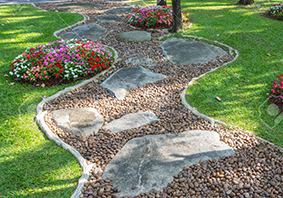
2. Method 1 — spray application (light to medium foot traffic)
Best for garden paths that get infrequent to moderate use:
- Excavate 25–40 mm below the surrounding garden level. Instal edging.
- Lay weed mat. If the base is soft, dig deeper and compact 50 mm of 20 mm road base first. Dampen before application.
- Spread half your pebbles over the base.
- Mix binder at 1:4 (concentrate : water) and spray until fully saturated. Rake level.
- Add the remaining pebbles, spray again, rake level.
- Compact firmly, then apply a final topcoat spray.
- Cure undisturbed for 48–72 hours — no rain, no foot traffic.
3. Method 2 — slurry mix (medium to medium-high traffic)
For paths that get used every day, mixing the pebbles through the binder gives a stronger, more durable bound surface:
- Excavate about 90 mm below garden level. Instal edging and weed mat.
- Compact a firm 50 mm base of 20 mm road base. Dampen it.
- Pre-mix binder at 1:3, then combine with pebbles in a cement mixer or large bucket — roughly 2 L of mix per 25 kg bag — until every pebble is coated.
- Lay the slurry at least 20 mm deep (40 mm for more demanding areas), using 1.5–3 bags of pebbles per square metre.
- Compact to a smooth finish and cure for 48–72 hours.
4. Aftercare
- Avoid scuffing the path when it's wet or right after rain — water temporarily softens the bond, and it firms up again as it dries.
- Light-coloured pebbles can dull over time as dust settles; a quick pass with the leaf blower keeps them clean (and no, the pebbles won't move).
How much would your garden need?
Enter your area and surface type — the calculator tells you the litres and bottle size, and where to find it in store.
Try the coverage calculator Where to buyThese are summary instructions and general guidance only — coverage rates are indicative and vary with substrate, porosity and technique. Always follow the full instructions before applying: download the Application Guide (PDF).